Field guide for Burlington owners
Finding Your Main Water Shut-Off
With a burst pipe, how fast you stop the flow decides how big the cleanup gets. Knowing where the main shut-off sits is the single most useful plumbing fact about your home.
- Steps you can safely take yourself
- What it looks like in Burlington houses
- When to put the wrench down and phone us
Calls only · a person answers
- 24 hResponse
- 28 areasAreas
- 28 servicesServices
- Licensed & insuredTrust
The short answer
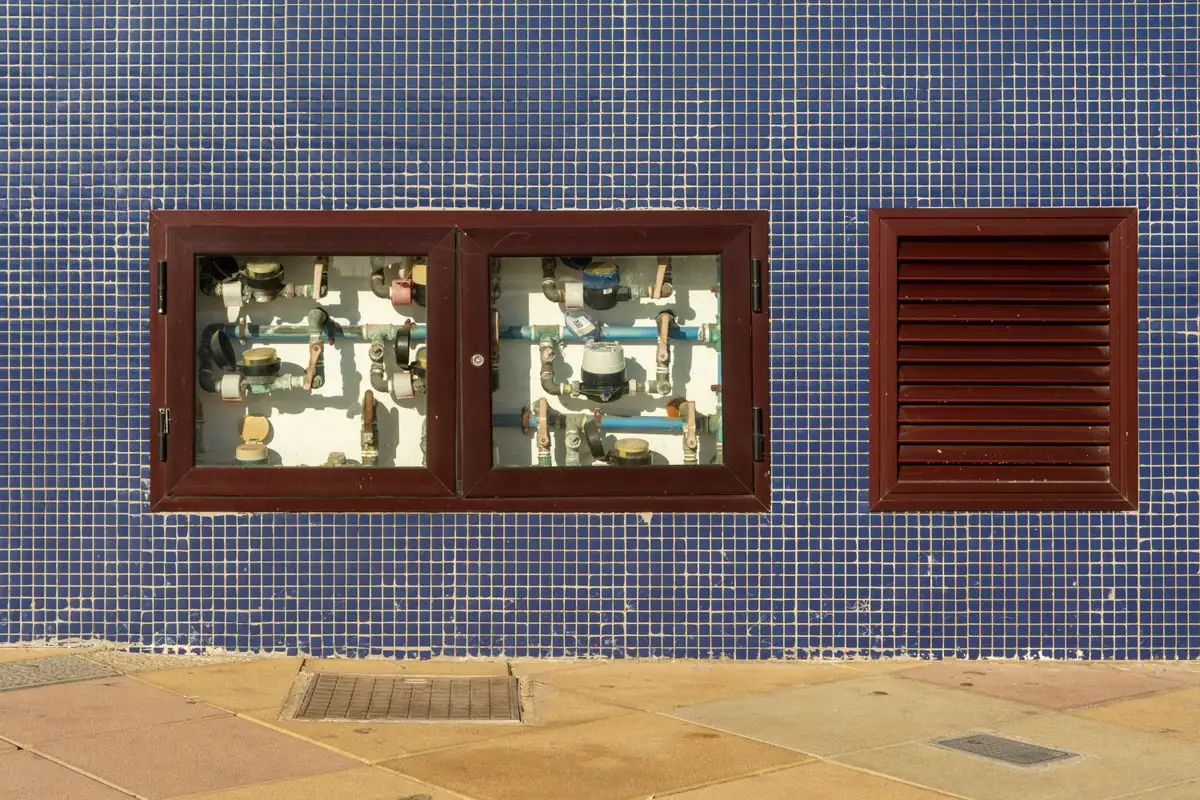
Most Burlington houses keep the main shut-off downstairs on the street-side wall, close to where the water service enters, near the water meter. It may be a round-handled gate valve or a lever-style ball valve. Find it now, test it, and walk each grown-up in your home over to it.
Key point
With a burst pipe, how fast you stop the flow decides how big the cleanup gets.
Step by step
- Start at the front basement wall. Look for a pipe coming through the floor or foundation, usually copper, plastic or older galvanized, with the water meter attached.
- Check behind finishes. In finished basements the valve often hides behind an access panel, under the stairs, in a storage room or inside a cabinet.
- Look at the valve type. A lever turns a quarter turn: parallel to the pipe is open, crossways is closed. A round wheel turns clockwise several times to close.
- Test it gently. Turn it closed, run an upstairs tap to make sure the flow dies, then open the valve all the way again. If it will not move or leaks at the stem, leave it and arrange a replacement.
- Find the smaller valves too. Toilets, sinks, the water heater, washing machine and outside taps each have their own shut-off.
- Label everything. A tag on the main valve saves time in an emergency.
Tree roots near the service line can also affect your lateral nearby; see our guide to tree roots in sewers for that side of the house.
Have this ready when you call
- Which fixture, which floor
- Whether the main is closed
- Rough age of the house and heater
- Any past floods or drain work
The moment to phone us
- The main valve is seized, leaking or fails to stop flow completely.
- There is no accessible main shut-off at all, which happens in some renovated basements.
- Your valve is an old gate type you want upgraded to a quarter-turn ball valve.
- You find the service pipe is grey and soft rather than copper. Read about lead water service pipes.
A failing or sticky valve also features in many low water pressure cases.
First move in a leak
Close the main shut-off, open a low tap to drain pressure, then call (365) 464-5184.
Burlington specifics
Older bungalows and storey-and-a-half houses in Roseland, Dynes and downtown tend to have gate valves that have not been touched in decades and may not close fully. Homes built from the 1990s on, such as in The Orchard and Alton Village, more often have ball valves near a mechanical room. Townhouses and condos usually have a unit shut-off near the water heater or laundry, though some share a riser controlled by building management. Rural properties on wells shut off at the pressure tank instead of a city meter. There is also a municipal curb stop outside, but that belongs to Halton Region and should be operated only by them.
Before going away: closing the main shut-off for a long trip limits damage if something fails while you are gone. Turn off the water heater supply too, following its manual.
Questions we hear
Can I turn off the water at the street?
The curb stop belongs to Halton Region. Contact them if you cannot shut off water inside your home.
My valve is very stiff. Should I force it?
No. Forcing an old gate valve can break the stem or the gate. Have it replaced instead.