Field guide for Burlington owners
Galvanized Pipe in Older Houses
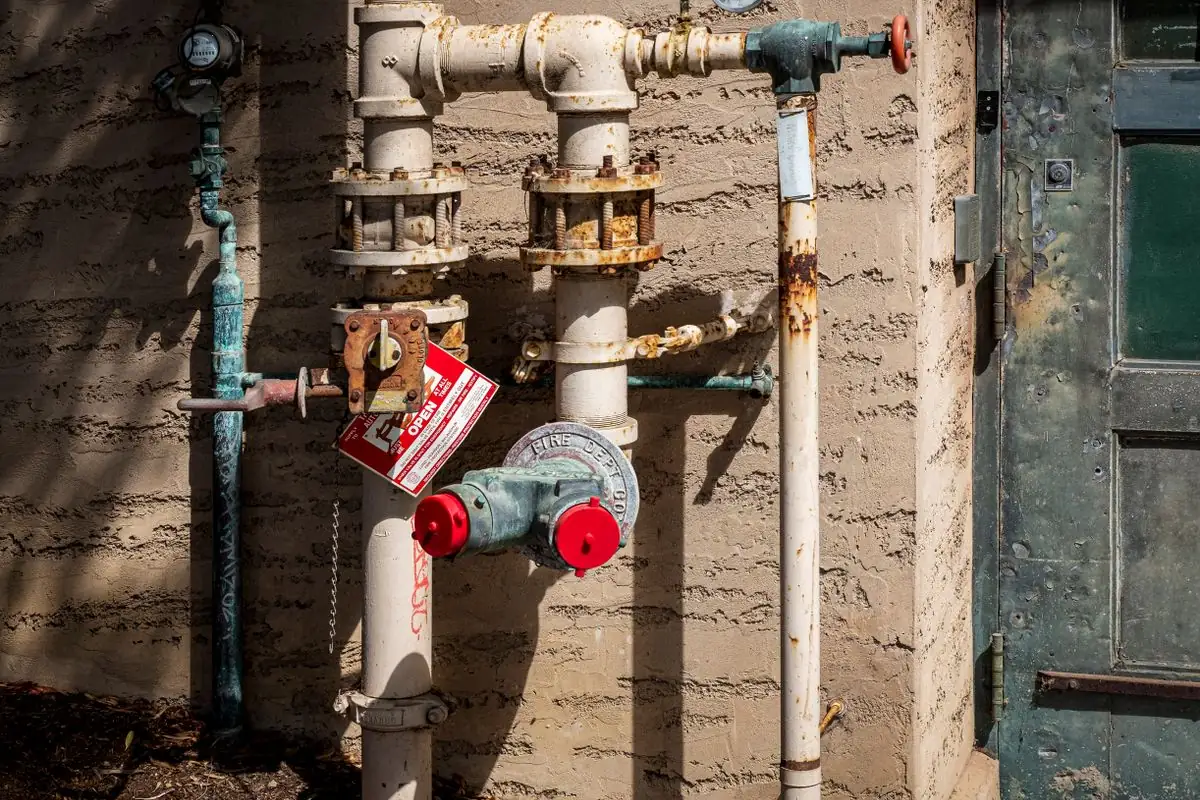
Galvanized steel water pipe was standard in houses built before about 1960, and plenty of it remains in Burlington and Hamilton homes. Knowing how to recognise it, and how it fails, helps you plan repairs before a leak plans them for you.
- Steps you can safely take yourself
- What it looks like in Burlington houses
- When to put the wrench down and phone us
Calls only · a person answers
- 24 hResponse
- 28 areasAreas
- 28 servicesServices
- Licensed & insuredTrust
The short answer
Galvanized pipe is steel dipped in zinc, a coating meant to hold off rust. Over decades the zinc wears away and the steel corrodes from the inside, so the pipe's opening narrows and its walls thin. The result is falling water pressure, rusty or discoloured water and, eventually, leaks at threaded joints. Most galvanized supply piping in older homes is well past its expected life, and replacing it with copper or PEX is generally the lasting answer.
Key point
Galvanized steel water pipe was standard in houses built before about 1960, and plenty of it remains in Burlington and Hamilton homes.
Step by step: how to spot it
- Look at exposed pipe in the basement near the water meter, the water heater and under sinks.
- Check the colour. Galvanized is dull silver-grey, sometimes with rust stains. Copper shows a penny colour, and PEX is coloured plastic.
- Look at the joints. Galvanized pipe is joined with threaded fittings, so you will see threads at elbows and tees. Copper joints are soldered and smooth.
- Try a magnet. A strong magnet sticks to galvanized steel but not to copper, brass or lead.
- Scratch gently. If a scratch reveals shiny silver metal that is soft, the pipe may be lead rather than steel. See our lead water service guide.
Have this ready when you call
- Which fixture, which floor
- Whether the main is closed
- Rough age of the house and heater
- Any past floods or drain work
Why it fails
Corrosion builds up as rough scale inside the pipe, catching minerals from the water and narrowing the bore further. Pressure drops first at the farthest and highest fixtures. Joints are the weak points, since threading removed part of the pipe wall. Where galvanized pipe connects directly to copper without a proper dielectric fitting, the dissimilar metals speed up corrosion at that joint.
First move in a leak
Close the main shut-off, open a low tap to drain pressure, then call (365) 464-5184.
The moment to phone us
Phone us if you notice brownish water when a tap first opens, if pressure is poor upstairs but fine at the basement tap, or if you notice weeping at a threaded joint. Patching one section of galvanized pipe can help in the short term, but disturbing old fittings sometimes starts a leak elsewhere. A planned replacement is usually less disruptive than a series of emergency repairs. Our repiping page describes how we replace old supply lines, and water pressure problems covers other causes of weak flow.
Burlington specifics
In Burlington, galvanized piping turns up most often in prewar and early postwar houses around downtown, Maple, Roseland and Aldershot, and in Hamilton's older neighbourhoods such as Westdale. Some houses also kept a galvanized water service from the street, which may need its own replacement; see water service line replacement. Home inspectors and insurers increasingly ask about galvanized pipe, and some insurers have restricted coverage for houses that still have it.
If you are shopping for an older home, our article on buying an older home covers other systems worth a look.
Questions we hear
Is galvanized pipe dangerous to drink from?
It is mainly a problem of corrosion, pressure and leaks. In some older systems, lead from earlier service pipe or solder may also be present, so testing is sensible.
Can I replace galvanized pipe gradually?
Yes, room by room is possible, but connections between old and new should use proper transition fittings, and a full replacement is often simpler.
Will replacing it improve my water pressure?
In most cases noticeably, because new pipe restores the full opening that scale had narrowed.